Vitamin D and the Irish winter: do you actually need a supplement?
Between October and March there is barely enough sunshine in Ireland to make vitamin D. Here is what that means for you.
5 min read
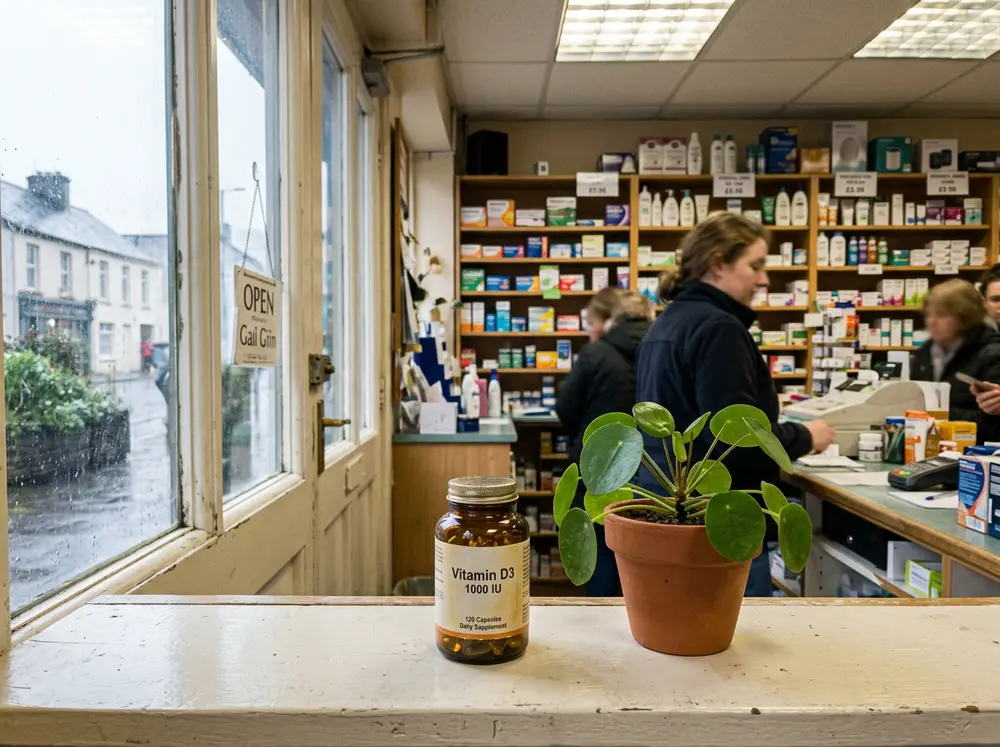
Vitamin D is often called the sunshine vitamin, because our skin makes it from sunlight. The catch in Ireland is that from about October to March, the sun simply is not strong enough for our bodies to make what we need. For a lot of people, that makes a supplement genuinely worth considering.
Why vitamin D matters
Vitamin D helps your body absorb calcium, which keeps your bones, teeth and muscles healthy. It also plays a role in supporting your immune system. Low levels are surprisingly common in Ireland, especially over the darker months.
Who is most likely to be low
- Older adults, whose skin makes less vitamin D
- People who spend most of their time indoors
- Anyone who keeps their skin covered, or has darker skin
- Babies and young children, and people who are pregnant or breastfeeding
More is not always better with supplements. Come and talk to us about the right dose for you or your family, especially for babies and young children, and we will point you to a suitable, good-quality option.
Food helps, but only so much
Some foods contain vitamin D, including oily fish, eggs and fortified foods, and they are well worth including. For most people in Ireland, though, food and winter sunlight alone are not enough to keep levels topped up, which is where a daily supplement comes in.
In an Irish winter, the sun does most of the work for only half the year. A simple daily vitamin D is one of the easiest ways to fill the gap.
Not sure where to start?
Pop in and ask. We will talk through whether a supplement makes sense for you, help you choose the right strength, and answer any questions about the rest of the family too.
Here to help, whenever you need us
Pop in, call us, or get sorted online in seconds.
Superintendent & Supervising Pharmacist at Pharmacy Hub Killinarden, an award-winning independent community pharmacy in Tallaght. This article is general information and is not a substitute for personal medical advice.